


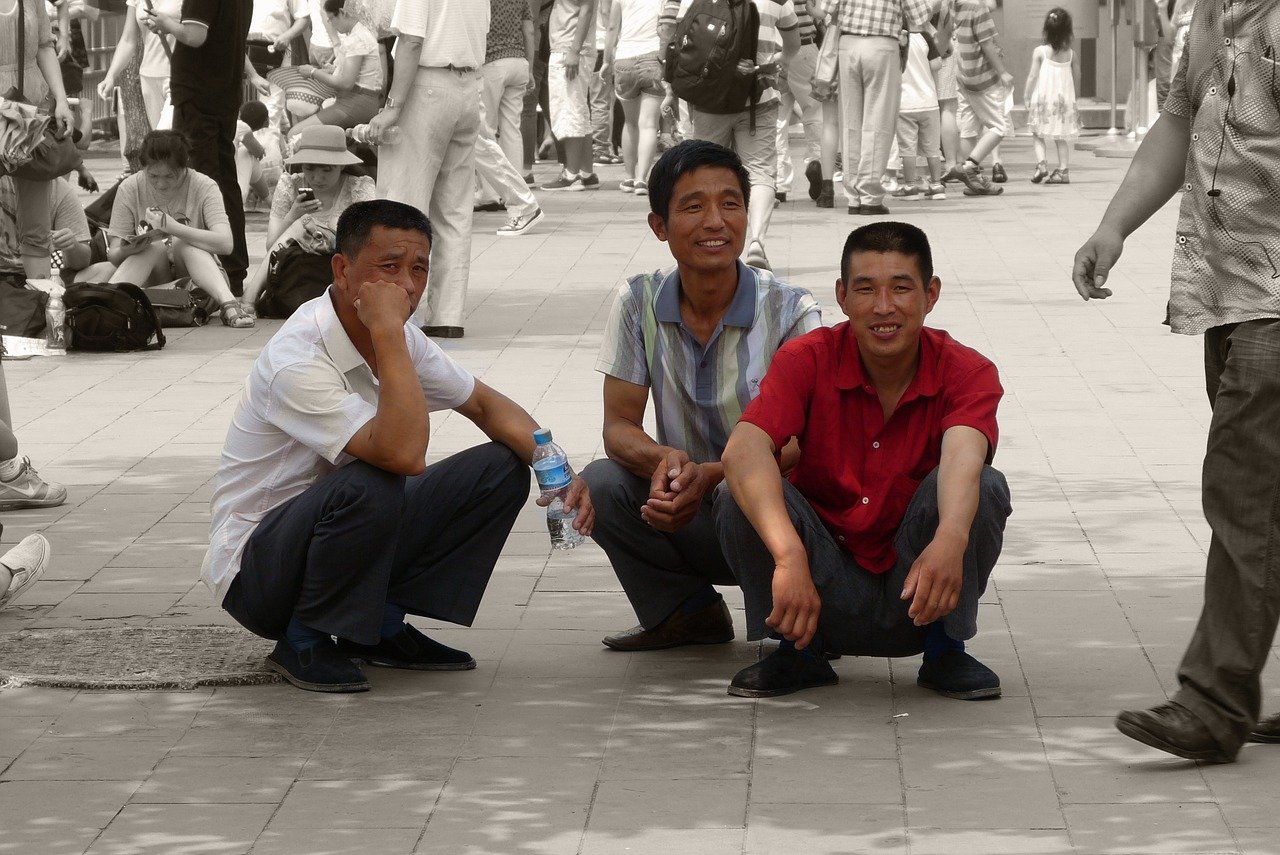
An Asian squat also known as the primal squat is a deep squat where the hips are lower than the knees and the heels are flat on the ground. It is commonly performed in Asia to sit and do work, and it has become a substitute to standing when chairs are unavailable.
- Flexibility of hips, knee and ankles
In order to Asian squat, you need to have flexibility in your hamstrings, adductors, glutes and deeper glute muscles that controls the rotation of the hips. Flexibility in your calves are also required to allow your knees to sit forward. Furthermore, spinal muscles helps in positioning us in the squat comfortably so we still can stay upright. As well as the hip flexors and muscles in front of the shin needs to be strong to keep us in and out of Asian squatting for long periods of time.

2. Hypermobility
Our capability to move freely depends on not only flexibility of muscles but also joints. Hypermobility is when joints can move further then their normal rage of motion. Studies had suggested some population groups are more hypermobile than others like Asians to Caucasians (Shahid et al., 2013) and this has to do with mainly the laxity of ligaments. Ligaments that are more lax and stretchy have more collagen makeup which is due to genetics. So don’t fret if you have very stiff joints and muscles , it could also mean you are genetically less flexible.

3. Bone structure and shape
Everyone’s bone structure and shape varies and this highly impacts mobility and flexibility. Everyone has a different squat that is most comfortable to themselves and this has got a lot to do with structures and bone ratio like the depth of the hip socket, the height of your socket , width of your hips and size of your femur head. For example, females have wider width of hip and deeper hip sockets so more females can perform the Asian squat.
Performing an Asian squat can be easy for some and difficult for others but with the correct posture guidance there maybe a few ways to try and work out what is affecting your ability to do the perfect and pain-free Asian squat.

Here are a few exercises to try out to improve your hip mobility for reaching the Asian squat:
- Seated hip internal rotation
Have your arms supported at the back of your body, sit with your hips and knees in a 90 degree angle and flip them left to right without lifting up the feet from the ground. Repeat with the hip and knee facing the opposite side. Do this for 30x each side


- Squat rocking
Be in a squatted position with something supported in front if you can’t balance in a deep squat. Start rocking front to back and side to side for 30 times each, this will improve your ankle mobility and strengthen your front calves.


- Side plank
Start side lying with knees bend, lift the bum up and get supported on your elbows. Hold for 10s and repeat for 1-2 sets per day. Side plank can improve hip internal rotation and spinal stability, the more stable and strong your spine is, the more mobility the hip can achieve.

The disability to perform an Asian squat does not necessarily mean you are a weaker person, it just means you have less flexibility compared to the Chinese who squats and does chores for an hour. We are all built differently so it is important to understand that no matter you have wide or narrow hips, we shouldn’t expect everyone to move and squat the same. Knowing how you position and balance yourself with strong and healthy hips are the way to go!
References
Shahid, M., Mahroof, S., Wu, F., Bourne, K., Jose, R. and Titley, G., 2013. Are Asian hands more flexible than their Caucasian counterparts?. Hand Therapy, 18(3), pp.71-76.
Prepared by
Abby Siew
Your Physio Sri Petaling